
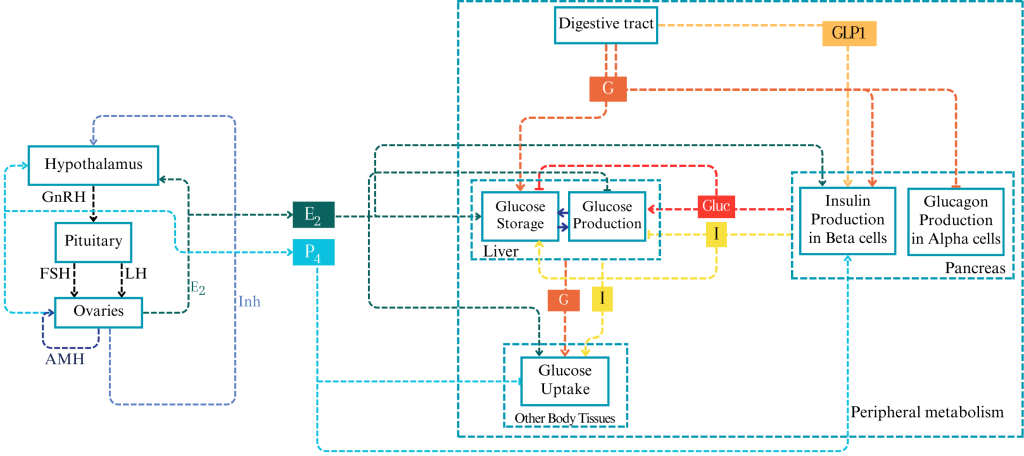
A new study by Carolina Ramírez Mazo, Lina Gómez-Echavarría, Laura Lema-Pérez, and Susanna Röblitz presents the first mathematical model to describe how hormonal fluctuations during the menstrual cycle influence glucose-insulin dynamics. The model integrates the effects of estradiol and progesterone on insulin sensitivity, insulin secretion, and β-cell maintenance, providing new insights into the complex interactions between reproductive hormones and metabolism. The findings contribute to a better understanding of women’s physiology and may support future research on diabetes and metabolic health in women.
The study, A physiologically based mathematical model describing estradiol and progesterone actions on glucose-insulin dynamics throughout the menstrual cycle, was published in the Journal of Theoretical Biology.
For more information on professor Röblitz’ research, see this link.