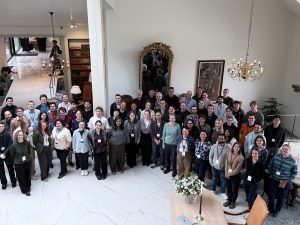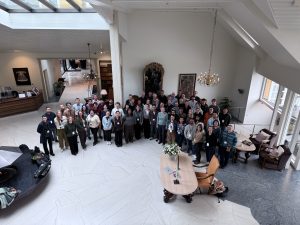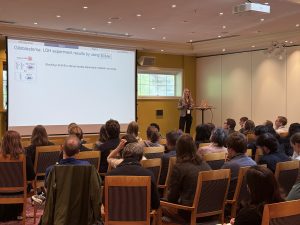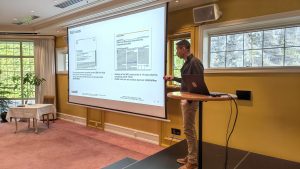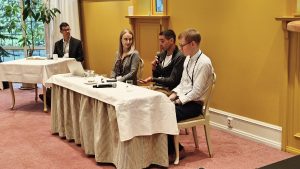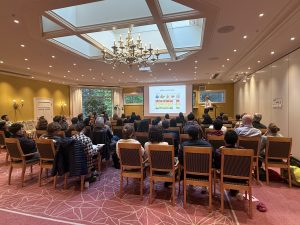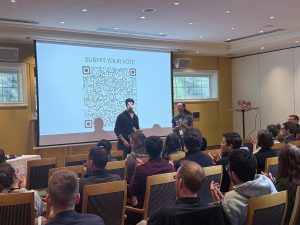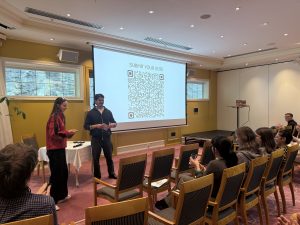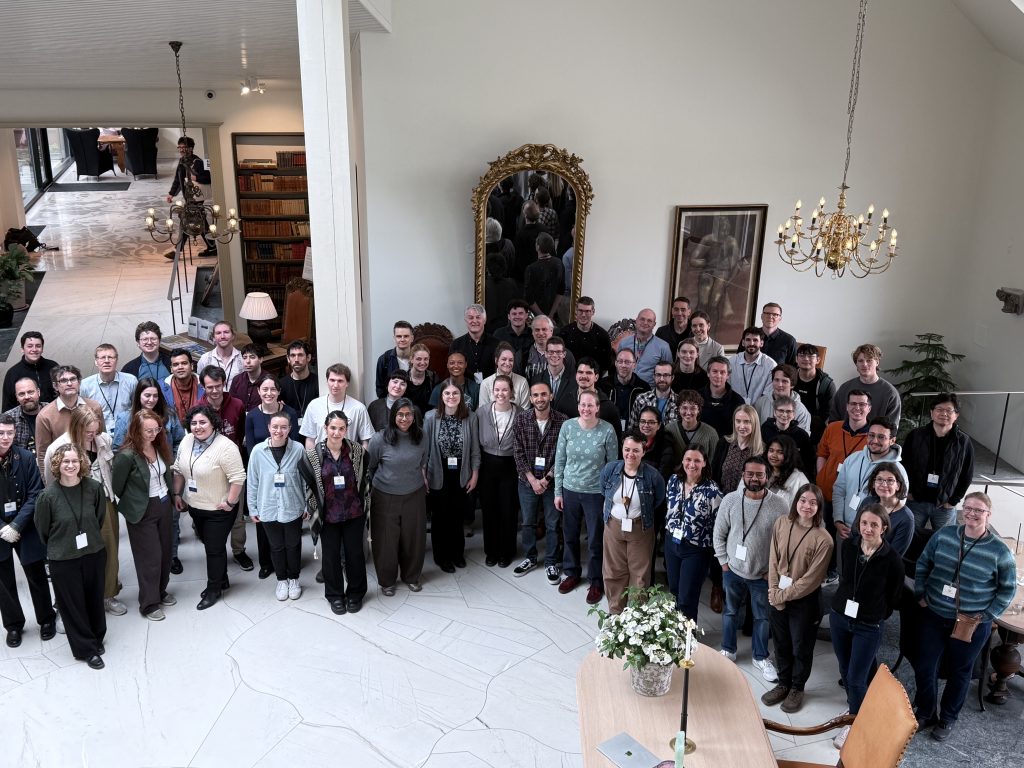
The Bioinformatics in Bergen 2026 (BiB2026) conference, held on 4 and 5 May at the picturesque Solstrand Hotel & Bad, was a resounding success. The event brought together close to 80 participants from various fields of bioinformatics, fostering a vibrant exchange of ideas and research.
The conference featured 16 oral presentations and 28 poster contributions, showcasing cutting-edge research and innovative approaches in bioinformatics. Attendees had the opportunity to engage with the latest advancements and discuss future directions in the field.
Three distinguished keynote speakers headlined the event. Macha Nikolski delivered an insightful presentation titled “From bulk to spatial metabolomics: bioinformatic methods with applications to glioblastoma”, presenting DIMet and SpacePath, two methods for improved analysis of bulk and spatial metabolomics data in glioblastoma. Ville Mustonen delivered a well-received talk, “Eco-evolutionary control of cell populations,” exploring how biological control systems use growth laws to steer evolving cells and organisms toward desired outcomes. Finally, Hervé Minoux gave an engaging talk “Improving Drug Discovery success with a little help from an AI friend”, showing how AI can improve drug discovery by accelerating target identification, optimization, and candidate selection.
Prizes were awarded by popular vote for “Best oral presentation” and “Best poster”. The one for “Best oral presentation” was awarded to Michelle Verstraaten for her “Using haplogroup assignment to quality control mitochondrial DNA imputation in the Norwegian Mother, Father, and Child Cohort Study (MoBa)”. The prize for “Best poster” went to Lise Dimitrijevic and her poster “Study and adaptation of the YLZ model describing interactions between oriented particles,using mathematical tools, and numerical simulations with the LAMMPS software”.
The BiB2026 conference not only highlighted significant scientific advancements but also strengthened the bioinformatics community, fostering collaboration and inspiring future research.